Start With a Good Base
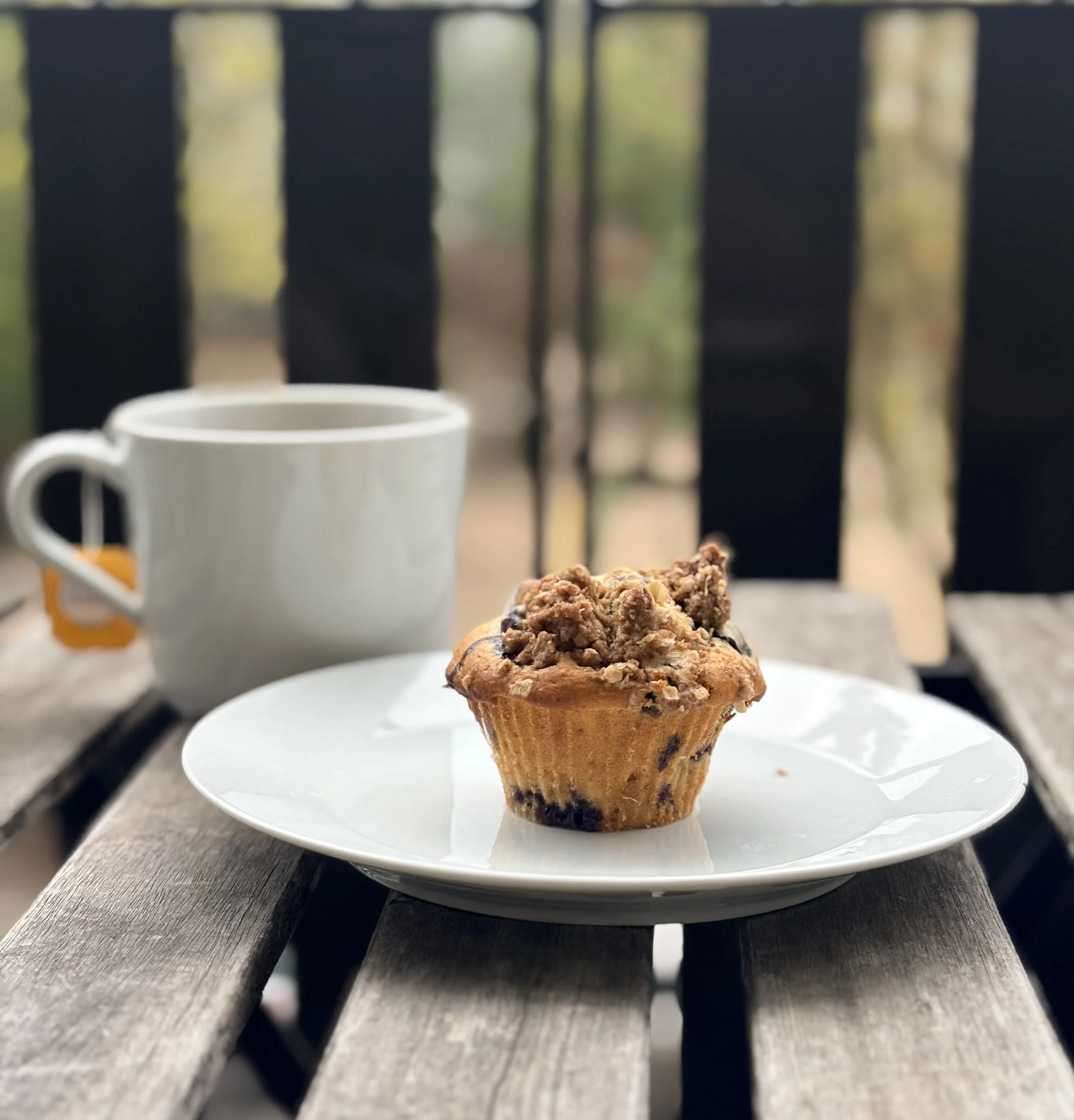
A blueberry muffin with crumble topping, made from scratch and without a recipe.
Much of the wisdom that I might impart finds its origins in a kitchen. Food was ever a large portion of my life, far beyond a measure of necessary calories for sustenance. Some of my earliest memories, precious few that they are, hearken back to a kitchen. I remember the simplicity of a shredded wheat breakfast with my grand grandmother, the shared dinners with my grandparents, cooking for dinner parties as an adult, sharing the kitchen with my wife, and eating new things in strange places. Through each of these moments, certain smells or flavors trigger memories and gain a power, a magic, that - for me – only music rivals. Of these two forms of mortal sorcery, only with cooking am I remotely adept.
Mamaw Linda always let me be in the kitchen with her. My cousin and I would hide under her nightgown and giggle as she stood at the stove. There’s a photo of me in some album somewhere, maybe three or four years old, perched on the kitchen table helping to roll out biscuits. Uncaught until years later was a small detail: I was using my feet and not my hands. This connection with my Mamaw would persist across time and transcend distance, sharing recipes and images of our culinary accomplishments no matter where I was in the world. She not only kept me fed in lean times, not only gave me my first skills lessons, but also taught me a kitchen could be safety.
I found a form of solace among the pots and pans. No matter how much my dad would rage, no matter the amount of labor or punishment he heaped on us, he could never deny that my sister and I needed food. So it was that food became safety and respite. For an hour, maybe wo, I had a break, alone, in the kitchen. I would call Mamaw – we used land line phones then with curly cords as mobile phones were massive and rare in the 1990s – to tell her what ingredients I had and devise a meal from the meager offerings of our pantry.
Food, then, became a kind of challenge too. Later in life I would watch professional chefs compete on gameshows with limited and oddly mixed foodstuffs. I always marveled at their struggles, for what stymied them was a natural condition of the poverty I grew up a part of. When all you have are food pantry donations you learn to adapt. At the time, when mostly I heard how worthless I was, finding ways to feed my family while my Mom was at work or school was something I was good at. Something I took pride in, and I desperately needed something to take pride in.
When I moved away, seeking that American Dream of doing better for myself and my daughter than I had known, I took these rituals of solace and challenge with me. In these places, far from the home I had known, food became an excuse. Cooking was an excuse to eat when I needed comfort, though I now recognize this for the maladaptive behavior it is. Cooking became an excuse of controlling a social situation as I sought to alleviate my occasional loneliness – if I had hosted the dinner, I commanded the setting. Cooking also became an excuse for calling my Mamaw to ask for kitchen advice when what I really wanted was a touchstone from home.
Later, cooking would give me a people, an identity. Foodies we were called, we epicureans who ate beyond the borders of our native culture and devoured the secrets of chefs as voraciously as we did the products of our labors. The internet made these new culinary techniques available readily, life in a city made strange foods near, and a certain disposable income made them accessible. This exploration was done with friends, formed a community. Thai, Indian, Pakistani, Creole, and more.
When times got lean again, when the money was gone and I once more subsisted on the charity of food pantries, I felt bereft of identity. I was listless, despondent, and alone. He lessons of being a foodie served me – forgive the pun. They, which is to say a pallet broadened by exposure from its Appalachian roots, helped me make the most out of a little. Never doubt what a spoonful of peanut butter, a splash of soy, and squirt of hot sauce can do to make a bowl of instant ramen into a Thai-inspired dinner.
More importantly, when I had nowhere to go, when I couldn’t take care of myself and felt only shame and contempt for what I had become, Mamaw once more took me in and food would become my path to recovery. Cooking in her kitchen – remodeled and not even in the same part of the house it had been in all those decades prior – became a way to give back for all she was doing for me. One meal this month. Two the next. How often I cooked became a measure of my recovery. The moments she cooked became less about the necessity of no one doing it for her, and more about a chance to connect me with her past, her stories.
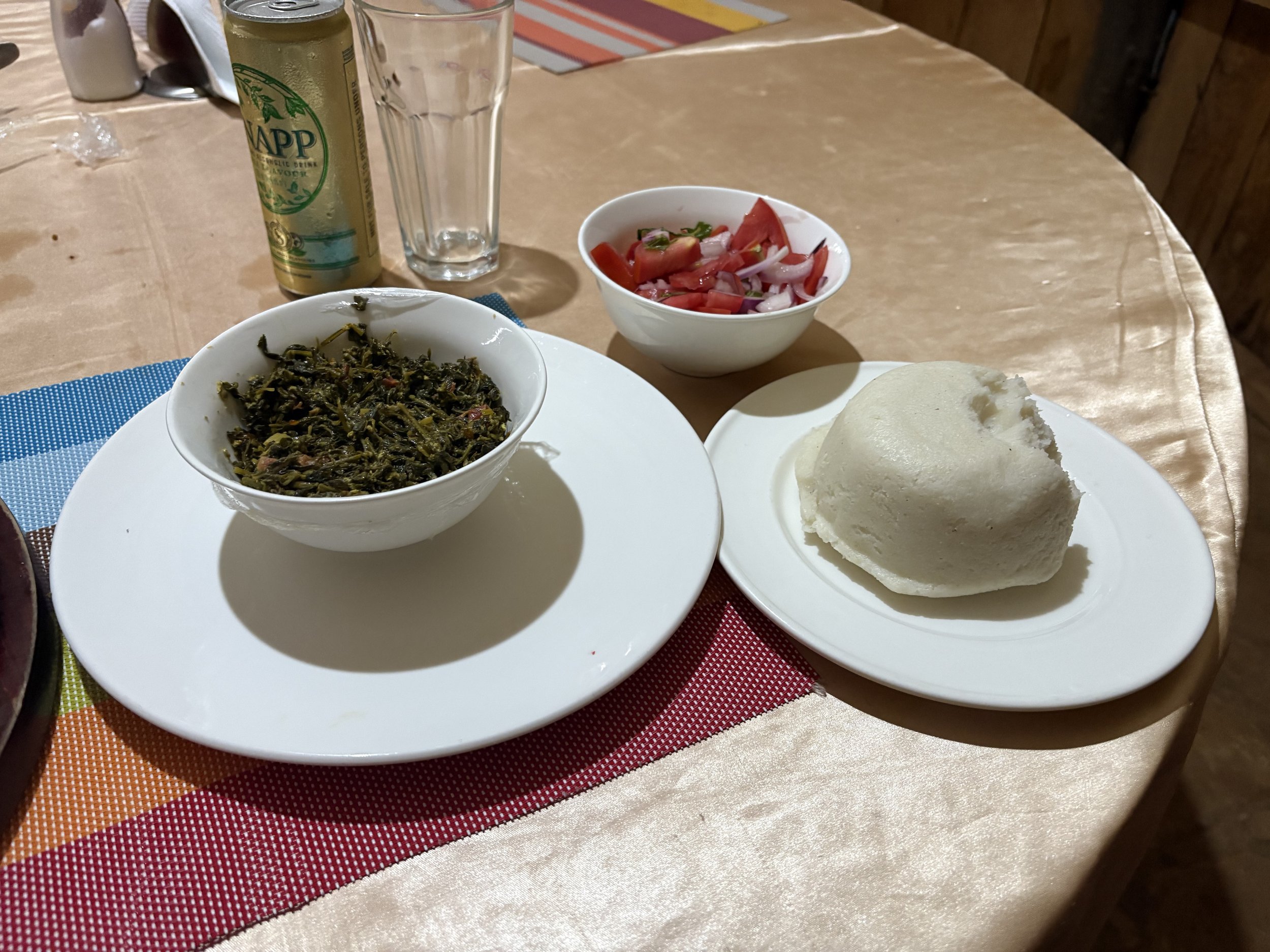
Ugali, sukumu wiki, and kachumbari from Kenya.
All of this prepared me for my first time in Kenya. Not only would cooking be a way to impress my wife, but it enabled me to survive not having the prevalence of prepared food I was accustomed to. I made my first red sauce, sharing lasagna with my new family so they could experience it for the first time. I got over my fear of baking, first for the pretzels I wanted and then for the focaccia and cinnamon rolls that would become a demand. Kenya became not just a place for me to practice my culinary skills, but to observe my wife as she shared her national dishes – dishes I would come to learn have cultural meanings. Kenya is where I learned food could be the story of a people, and my sharing of it a form of bonding.
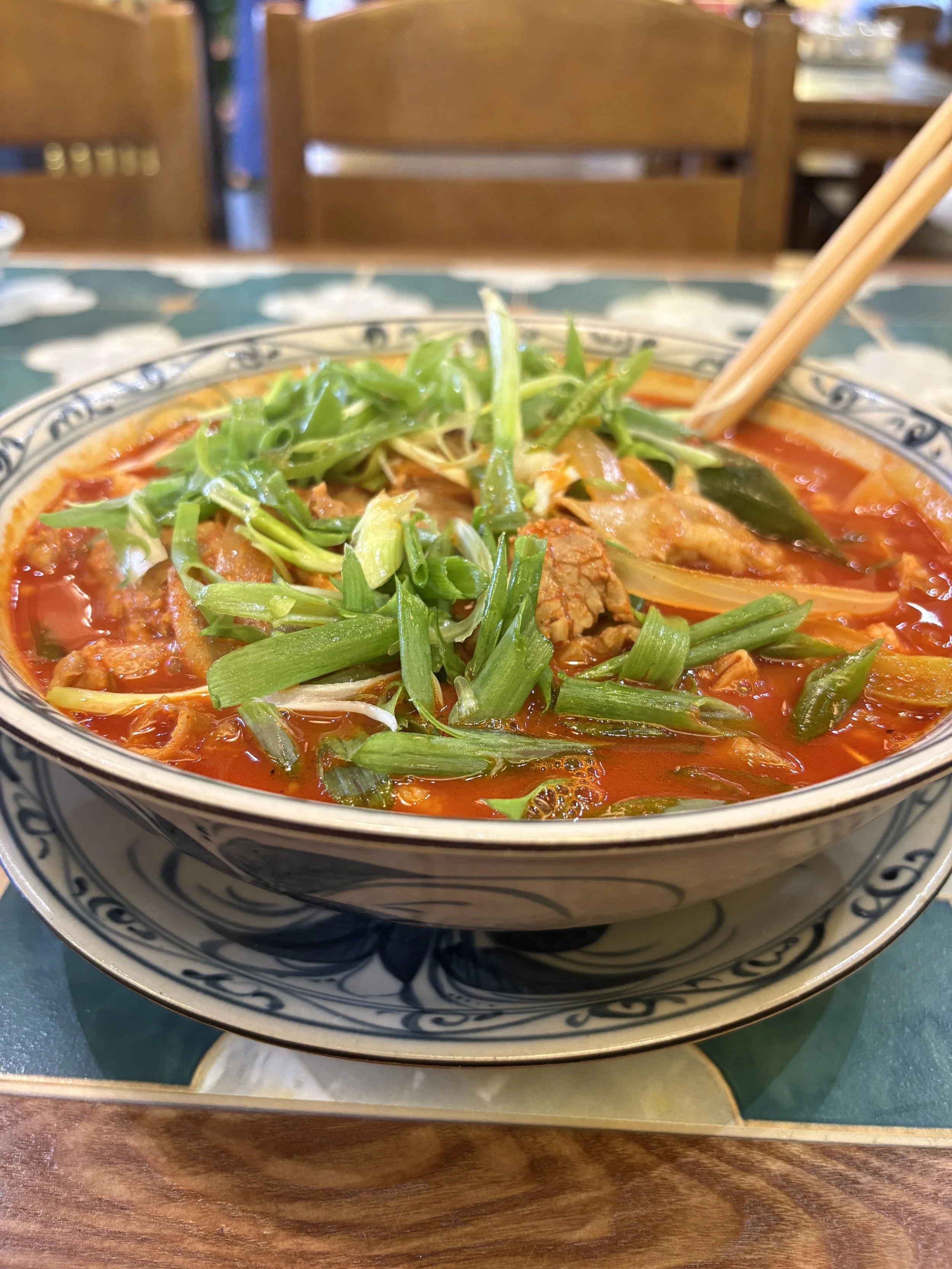
Spicy red pho with pork intestines from Da Nang, Vietname.
Nine months among the reds and greens of Africa gave way to three months along in Vietnam. Between walks on the pale sands, with the cool waters of the South China Sea lapping at my bare feet, I cooked in a kitchenette with a single induction burner, one pot and pan, and a half dozen pairs of chopsticks. I shopped at a little store called Moonmilk and found myself taking pride in a resilience I didn’t know I had, and an independence I feared lost. I watched other people cook – wizened women using old grills and bricks to heat the famed banh mi that were an act of defiance against their former French colonizers, the restaurant kitchens doling out regional variations of steaming pho. I learned the origin of their national dishes and in doing so deepened my understanding of my chosen field of social sciences.
Here, too, I would dine among Michelin Stars, fine French cuisine localized by a native son. In under two hours I had a master class in taking back stolen power and how a few small, subtle bites, delivered slowly over time, could lead to greater satiation than all the binging I turned to for comfort.
It was in Germany, though, that I would learn to enjoy the process as much as the product. The kitchen of our small studio became a place of meditation, where I forced myself to be in the moment. Here, cooking at home was a budget necessity, a necessary sacrifice we were willing to make to achieve a longer goal. Cooking became something practiced, a break from school, and a way to share the burden with my beloved. We shared moments made together, sometimes knowing as we ate that this meal or that would be unique, the creation of a random foods and spices we would never manage to replicate again.
Now, as I write this, I smell the scents of home. The sharpness of onions in the pan, the hint of sweetness from the pepper strips. In French cuisine they have mirepoix – onions, carrots, and celery cooked slowly to sweeten. For the Cajuns and Creoles of Louisianna, it’s the Holy Trinity of onions, peppers, and celery. The Spanish have sofrito of onion, garlic, peppers, and tomatoes. Onion, garlic, and ginger form many of the flavors we’re familiar with in Chinese cooking. Every culture has some base upon which a cook builds. That is the advice I end with: find a good base on which to build. Be it in food, hobbies friends, or found-family, find the base that supports you, challenges you, grows you, and is there when you have need.