Bourdieu’s Symbolic Violence

Parlez-vous français? Non? Me either. I had two semesters of French in achieving my Associate in Arts, but most of it didn’t take. Must like the four semesters of Spanish from high school; without an opportunity to use them on a regular basis, the pathways to recall erode and you forget how to say most things. As a sociologist, though, I have to think not just about the methods of language acquisition, but what the languages, themselves, might mean.
Let’s take French as our example. In America, French isn’t just the language of one of our allies, or a way to speak to remand groups of the Acadian colonies. It held top-dog billing in international politics, even spawning the term lingua franca to indicate the use of a language used in a particular area as a uniting force. It has a reputation for being romantic; go now and tell your partner, “Je t'aime plus que la respiration elle-même.” You’ll see them smile even if they don’t know you just confessed to loving them more than breath itself. The French languages has ties to Paris, to French culture, to refinement and class.
In short, knowing how to speak French has become a status symbol, something that French sociologist Pierre Bourdieu would call habitus.
The Theory of Habitus
The Theory of Habitus was born out of a dislike for a Marxist Philosopher’s take on humanity. Jean-Paule Sartre believed that a man was nothing more than what he makes of himself. This did not set right with Bourdieu who saw, from his own lived experience, that society has a way of shaping us even when we are responsible for some of how we respond. Reflecting on this , Bourdieu would eventually give us the concept of habitus: the way we internalize our external experience with the world, creating a filter out of our experiences, knowledge, perceptions, and practices to construct our common sense view of the world and the methods we use to portray our place in this world. Bourdieu’s Theory of Habitus is more complicated than this, but among its components is the idea that the daily rituals we perform, what we learn, how we spend our leisure time, where we go on vacation, how we dress, what we eat… the list goes on, all form symbols that betray our class to the world and let others know if we belong to their group or not. This, in turn, creates a form of capital that we use when navigating society.
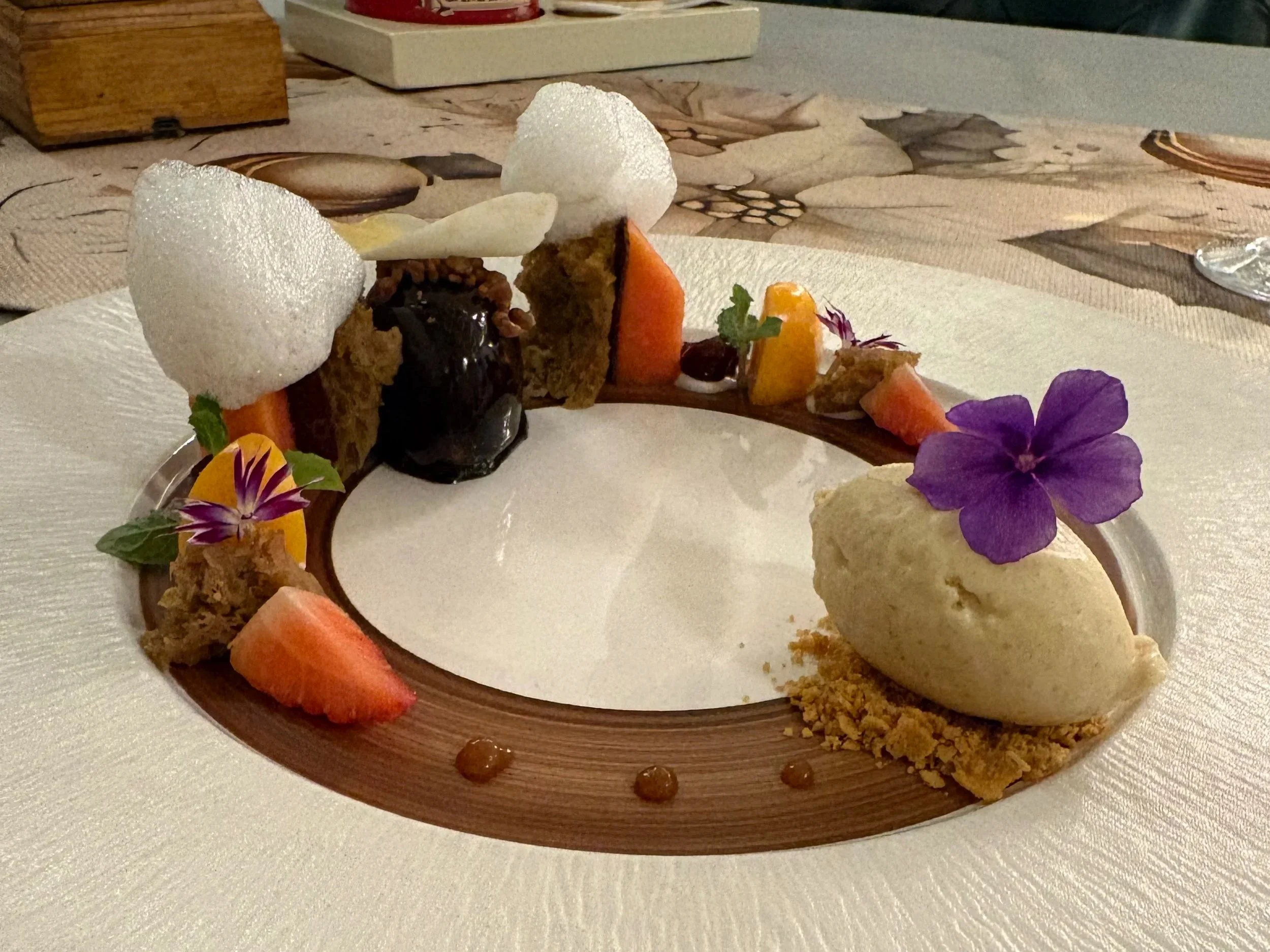
Some of this is touched on in The Temptation of Power and Status, so check that I out if you want to see how fine dining can be a form of cultural capital.
With this concept of habitus, Bourdieu also studied forms of capital. While he agreed with Marx that economic capital drove much of society, Bourdieu also spoke of other forms of capital: cultural, social, and symbolic. Economic capital (the resources we use to purchase what we want) could be turned into any of these, and often these other forms could be turned back into economic capital, creating a self-perpetuating system.
Then Bourdieu went further.
According to Bourdieu, it is this system of capital and our unconscious use of habitus that traps us in a stratified system with inequality. Cultural capital - like the embodied cultural capital of a Harvard diploma, or the objectified cultural capital of a fine art piece - are used as symbols that grant access. They provide status that can smooth a pathway.
Take the example of the Harvard diploma. Having an Ivy League education provides connections, like those made during your time at the school. They also come with the weight of the institution, and there are many jobs that, all things being equal, would go to the one with the more prestigious degree. These jobs then provide better economic outcomes than those without, which can be plied into more cultural or social capital, which can then be leveraged to grow your business or your career, which leads to… you get the idea.
Meanwhile, those without access to the economic capital that provides the other forms of capital are trapped without access to the greater opportunities.
Taste Classifies
“Le goût classe,” Boudieu was quoted as saying; taste classifies. Let’s go to that earlier example of speaking French. Knowing that language is considered a sign of elegance and class. It can make you seem more distinguished, more erudite. Pair it with the words of “The last time I was in Paris…” and you’re part of a group more elite (in their minds) than the average American. Talk about that croissant at the cafe’ on the Seine, you’re in the club.
Pick out your favorite painting. Research has shown that lower socioeconomic classes tend to prefer more realistic, more grounded works of art. Higher socioeconomic classes identify with more abstract, modern forms of art.
When you think of upper class leisure time, do you imagine them playing basketball or baseball? Or is it squash, rowing, or water polo?
Having high forms of economic capital leads to a situation where there’s a disconnect from the reality that those without such access experience. Food, shelter, and leisure are luxuries that should be enjoyed as a kind of art in itself, not just a need for basic survival. These “rich people things” show how they are divorced from the immediacy of life and instead dwell in a way that allows them to enjoy their refinement and make statements, subtle and otherwise, that they are different.
Tout pouvoir est violence
An accent can be habitus. Here I do not speak of the accent you have when you’re trying to “Tout pouvoir est violence” (all power is violence) that instantly outs you as an American. I mean just the regular accent you have from being a Midwesterner, or Californian, bruh.
When I was in fifth grade, Mrs. Becker made us speak over and over in front of the class until our accent was erased. We had to be able to say that final g, hear the h in where. We were told that when we grow up, we didn’t want to be prejudged to ignorance just because of the way we spoke. My accent was part of my habitus and I was being told it would close doors in my face.
And that’s a form of symbolic violence.
Symbolic violence is when the dominant class to use their capital, in whatever form, to make others think some aspect of their lives is lesser. My Appalachian accent? Not as good as that Cambridge, MA one. The history of African Americans in the US? Not worth knowing compared to the tons of white American history.
This becomes a way to spend social and cultural capital while also re-enforcing the symbolic boundaries between the classes.
Conclusion
In the past, the spending of capital to inflict symbolic violence was easier than it is today. Culture can be shared freely and easily across the internet - stored on a website, shared via social media, or watched through a platform like YouTube. Now we have the ability, as the dominated class, to ensure that our pasts aren’t erased, that we take pride in our cultures, and that we can - together - take power for ourselves.
In the Internet, we have a great regulator. We can look up any bit of knowledge we want and know it - claiming some cultural capital - or fight back against the changing narratives of the dominating class. We can tell our stories, whether those stories are the recipe for Mamaw’s cornbread or riots in Tulsa. We can see works of art that are too far for us to travel and see, hear enough opera to speak of the emotion Michael Spyres puts into his work. We can take the power.
Gatekeeping is based on having the right keys. Go get yours.