The Temptation of Power and Status
Power, colonialism, and the spread of culture are core areas of sociology and have been massive interests of mine. This week, I was privileged to turn those interests into a case study - an exploration of fine dining that I had never before attempted. What you’re about to see is an exploration of the sociology and history behind French haute cuisine, done in collaboration - my first! - with The Temptation, a French restaurant in Da Nang blending classic techniques with local Vietnamese flair.
A trio of delectable starters, including a charcoal salmon that was just oomami melting on the tongue.
I want to say, up front, that anything I say about The Temptation is my own opinion. I reached out to them for this opportunity and made clear, from the start, that I was not looking for any form of compensation for my efforts, nor did they give any.
What follows is a discussion on soft power, cultural hegemony, localization, and the currencies of status. It’s a little long, so I’ll put chapter times on the screen - pause to read them - if you want to skip to a particular section. The central argument is this: Fine dining is an expression of social and cultural performance of status, taste, and power. It uses its norms - from the dress code to the table settings - and its price as barriers to separate the experience from the everyday and establish its own elite social field.
As someone from a working class background who had only seen fine dining on television prior to this experience, I want to thank the staff at The Temptation for making this an extremely enjoyable evening.
I. Food as Power
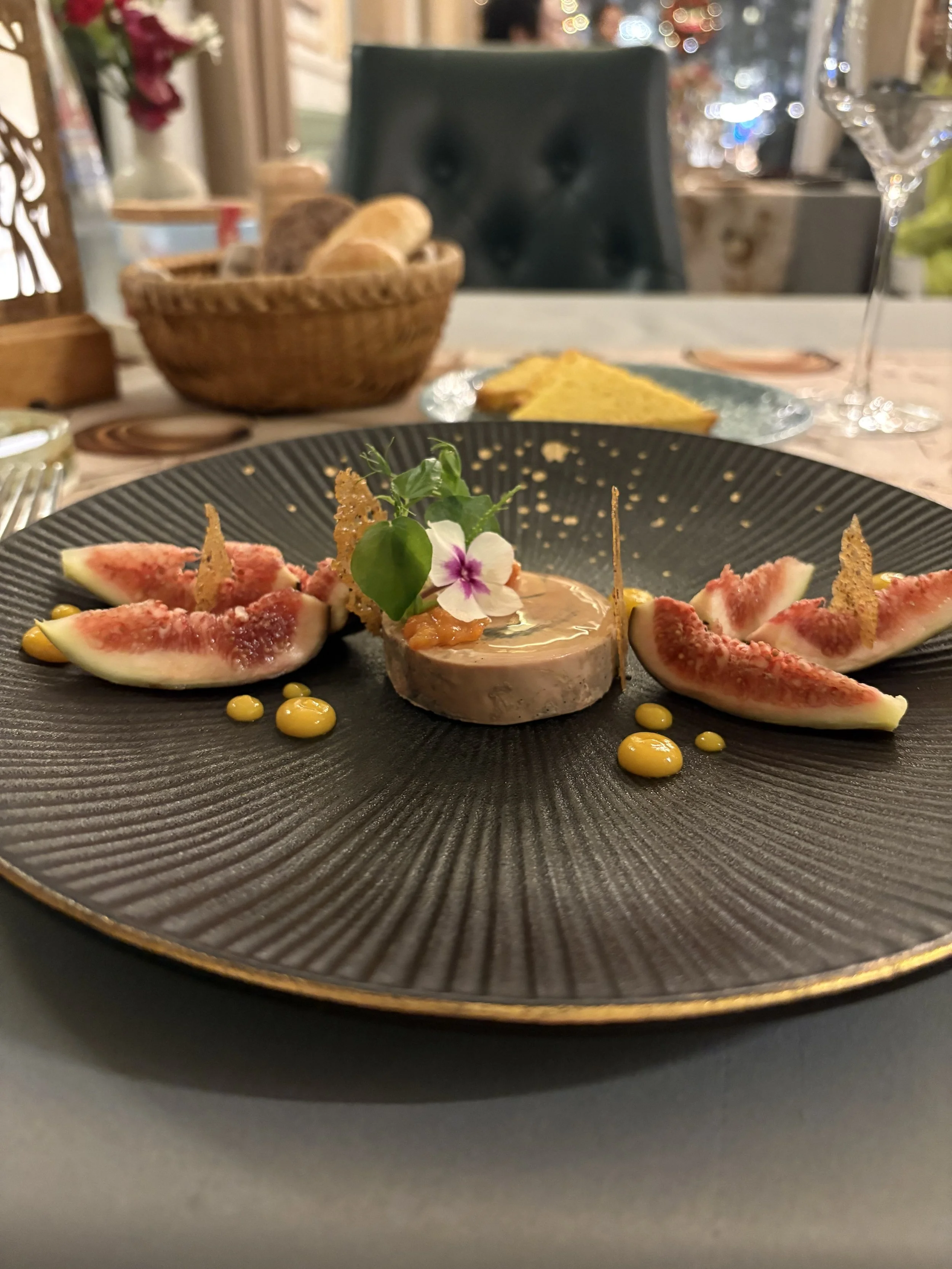
Foie gras surrounded by figs.
Cultural hegemony, a concept first documented by Antonio Gramsci in the early 20th century, is the dominance of one culture’s norm’s and practices - in this case French culinary traditions - as these standard of excellence worldwide. When people think of exclusive, fine dining experiences they often summon images of French cuisine: escargot, champagne, foie gras, or pate. By showing this part of their culture to be superlative, France gains a positive image around the world, opens economic opportunities for its citizens to travel abroad, and brings wealth back to its own shores as people travel to France to learn its vaunted techniques.
Chef An, owner of The Temptation, is a graduate of the Auguste Escoffier culinary school in France.
This kind of hegemony also pushes the use of exported products in order to meet the high standards. Champagne is only champagne if it’s from the Champagne region of France. Only brie, roquefort, or mimolette cheese will do! Through this process, French culture and cuisine earns a status above that of the local foodways. This, again, leads to an influx in global wealth to France and, as demand for these products goes up in foreign countries, gives France the ability to wield power on the political stage through trade agreements, export controls, and tariffs.
This process becomes more poignant when viewed through the lens of colonialism. In Vietnam, the French presence was one of political imposition and not just cultural exchange. The French established their cuisine and related products as the standard of social distinction for the ruling class and elite. I talk more about this in previous videos on the origins of the banh mi and Vietnamese coffee - where the coffee bean and the wheat in baguettes were introduced by the colonists as symbols of status that were either outright denied to the indigenous population or made so expensive they were out of reach for most.
France isn’t the only country that uses their cuisine as soft power; they’re merely the focus here because of their colonization of Vietnam - my current location - and my collaboration with The Temptation. This could just as easily be about Thailand, who provided subsidies to open Thai restaurants in foreign lands since 2002 and allows Thai cooking schools as a reason for long term visas into their own country.
In a world where colonialism is largely seen as a bad thing, cultural hegemony is a tendril of that past that offers a more insidious route to power and control.
II. The Ritual of Service and Status
From the moment you arrive at The Temptation, everything becomes about the service. You’re greeted by the maitre’d’ at the patio and shown to your table. A waiter quickly appears to settle your napkin into your lap and offer up the menu. Will that be sparkling or mineral water? Oh, look, there’s a strange tablet that turns into a scented wet cloth when you dip it in the water next to it. In my experience, everything was performed with precision and a sense of timing that, after 9 months in Kenya on Swahili Time, I found to be comforting. I never had to wait on a drink refill, nor even request one; it was done as soon as my glass was getting low. Courses flowed with just enough time between them to allow you to reflect on what you just consumed. If a waiter - any waiter - saw a need at my table, it was immediately seen to. Everything from those first moments becomes a ritual designed to make the guest feel elevated, special. These little details separate the guest from the mundane and make a visit something special.
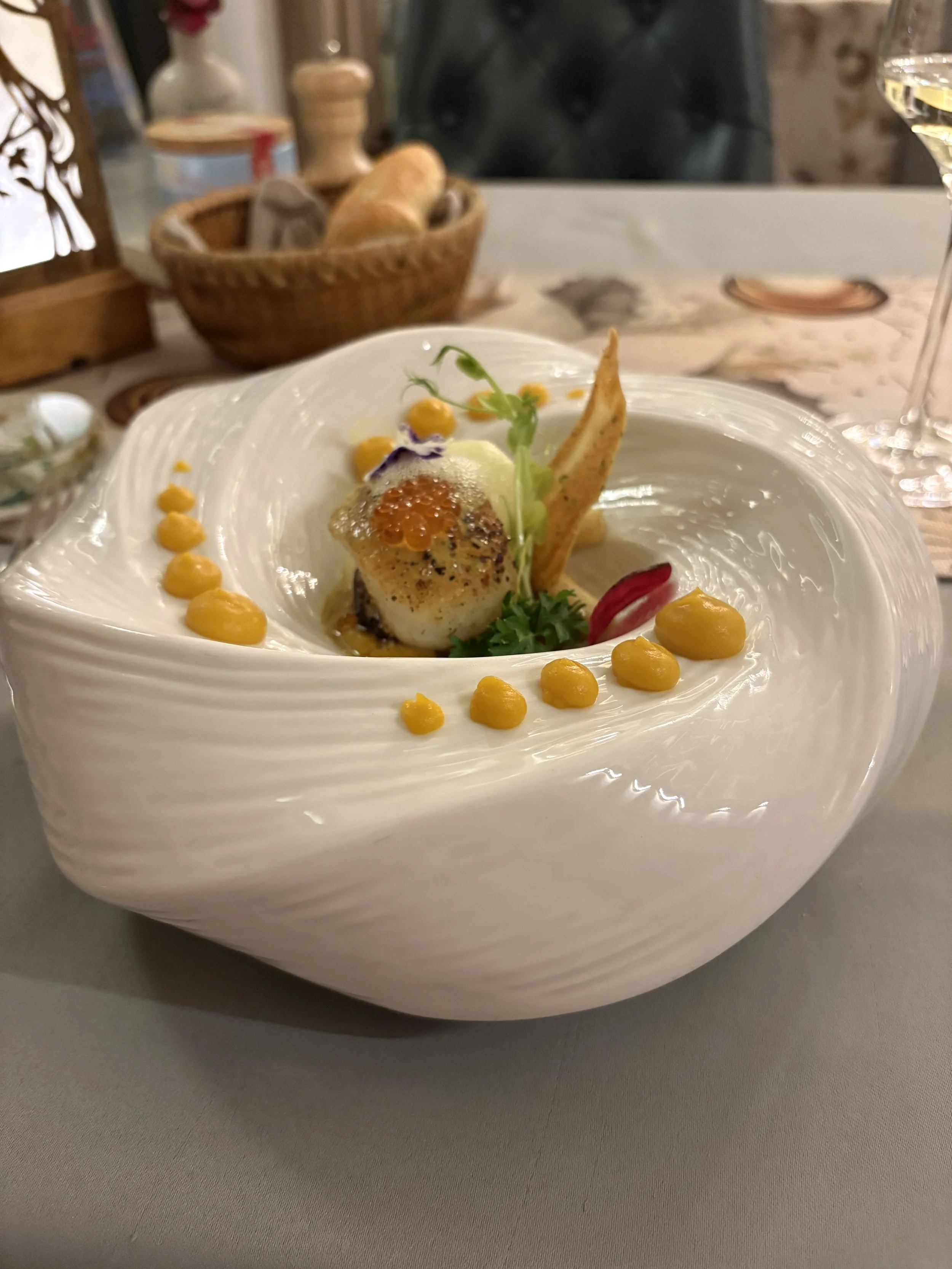
This was the dish that made me think of autumn in Maine.
One might even go so far as to use Durkheim’s use of the sacred and profane. Dinner with your family, or even the extra effort you take making dinner for that special someone on date night, becomes profane; they are utilitarian and normal. But a visit to a fine dining restaurant like The Temptation is sacred. It transcends the every day with the scripted acts of service from the staff, the artistry put into the food, and the awe you feel at being the focus of these events.
This is a good time to talk about emotional labor. Arlie Hochschild coined the term in her 1983 book The Managed Heart to describe the work and expectations required to manage one’s own emotions and expressions while interacting with others. As someone who worked for years at a help desk, I can appreciate the unseen portions of labor. When your job is pleasing a customer, it doesn’t matter how bad your personal day is or that you have a headache; you have to smile, you have to be pleasant, and you have to attend to another’s needs. Parents, those who care for the disabled, and good leaders all understand this principle and the personal toll it can take. It’s good to think about this aspect of labor when considering how much to tip or whether that service fee on the bill is worth it.
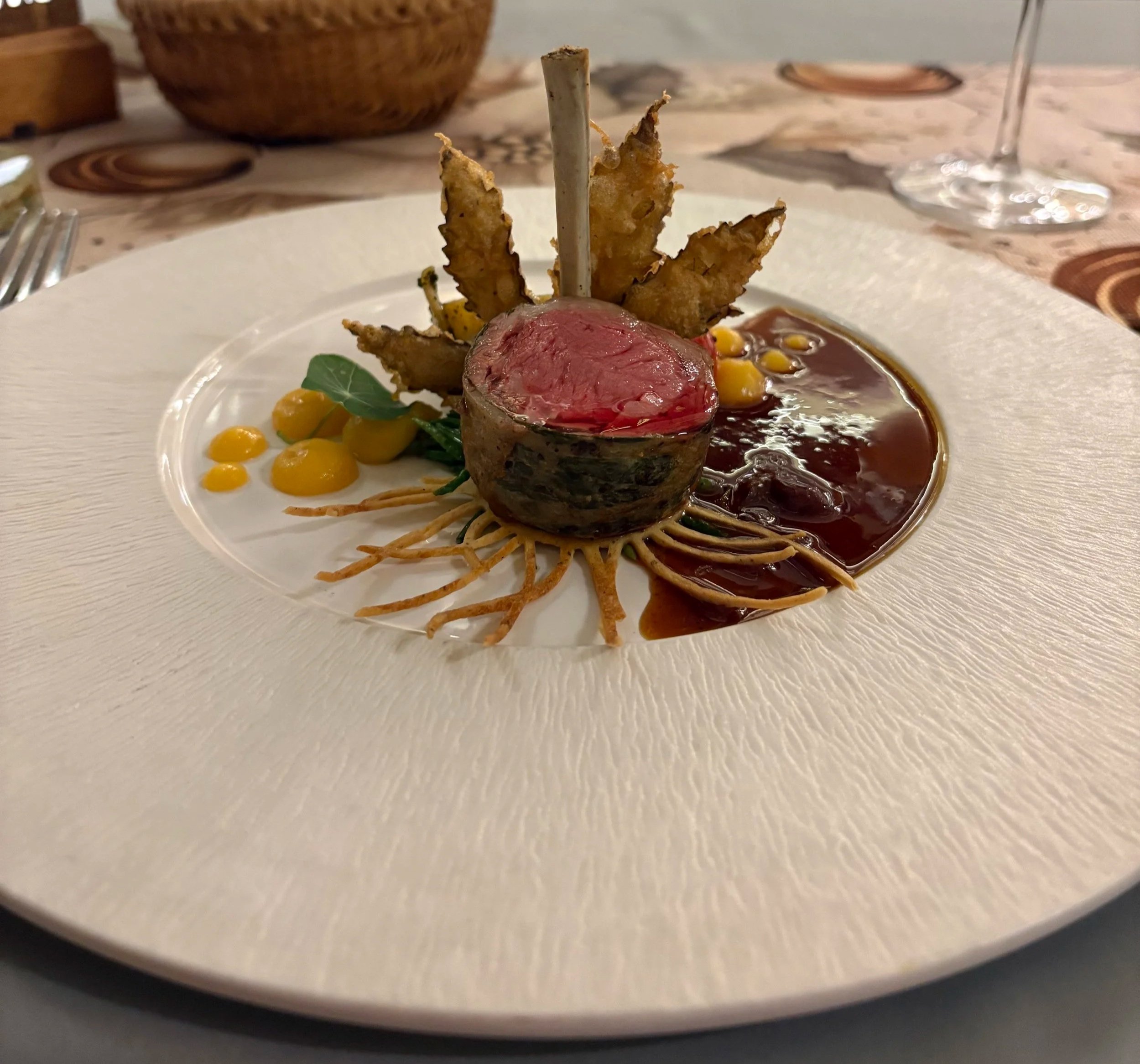
In high-end dining, you pay for every aspect of the service, and the front of house staff at The Temptation were true professionals. They were the showpieces of the sacred in this event. This was not simply someone bringing food and drink and maybe offering an anecdote in hopes of luring a bigger tip. The staff here would take time to explain things: how the acidity in this style of wine would help cut through the richness of the foie gras, how the boldness of this wine would stand up to the flavors of the lamb; what each edible element on the plate was and how they could be enjoyed best according to the artist’s thoughts. Yes, artist, because what was presented was no mere food.
III. Defining Excellence
It’s not enough to simply offer great service and fantastic food. Someone, somewhere, has to set the standards by which everyone judges a restaurant. In the culinary world, the Michelin Guide and its iconic stars are known around the globe as a way to do this. If you’ve paid attention to the video so far, then you’re not going to be surprised to learn that the Michelin Guide is a product of France.
Edouard and Andrew Michelin, founders of the Michelin Tire company, created the guide in 1900 as a way to encourage car sales and their use. After all, more cars and more driving meant more tires to be sold. Their system was simple: one star meant it was a good restaurant worth trying; two stars meant it was good enough to detour from your route to try it; and three meant the restaurant was so good you could plan a whole trip around it.
The Temptation received its first star in 2024 and its second in 2025.
Michelin stars drive business, giving customers around the world a standardized guide to excellence that send them flocking to fining dining establishments like The Temptation, but also to streetside noodle stalls, or English pubs. More than that, they have become a form of social capital.
In Pierre Bourdieu’s 1979 work Distinction, he argues that taste is not a natural state of mankind, but rather a social construction that’s weaponized to maintain hierarchy. And yes, this is another Frenchman entering the video. Distinction, the concept and not the book, is the process of setting one’s self apart. In fine dining, this requires possessing the “right taste” - one that requires knowledge, money, and time to cultivate. This becomes a way to reinforce the superiority of the elite. If you cannot afford the high prices of the entry - be it the money required to travel to the location, the money to pay for the menu items, or the money and style of the right clothing to get through the doors - then you could never hope to gain correct vocabulary to even discuss these matters. Without having to ask for a membership card, experience and lexicon become a social capital, to be bought and spent among the in-crowd.
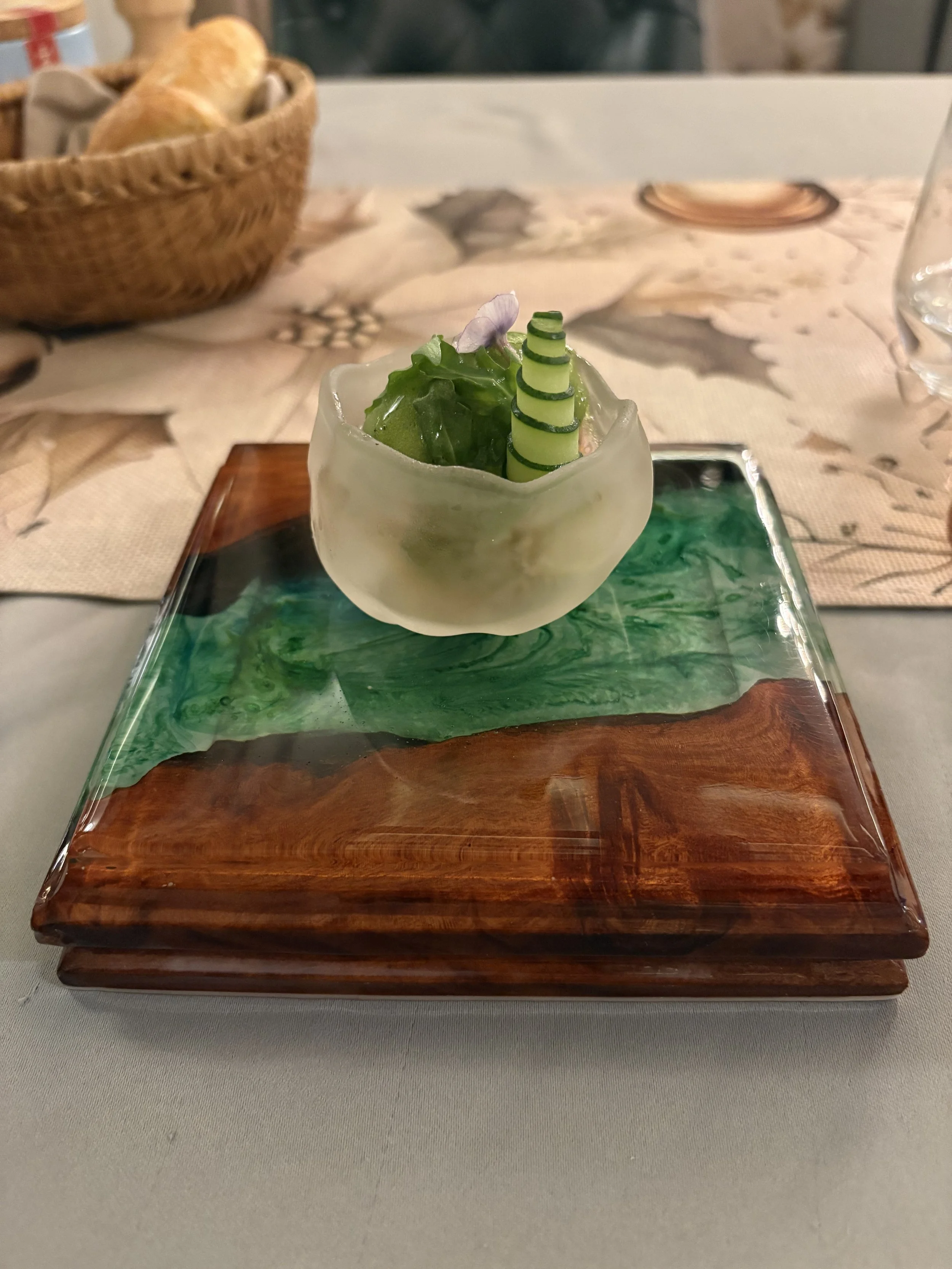
The cleansing interlude!
My visit to the Temptation showed me a new way to view food and a better understanding of the high-class reviews I had read but never fully grasped. The food was often presented in a deconstruction, allowing the diner to taste each element individually if they choose. When I tried these elements separately, I was sometimes underwhelmed. The flavors were not as strong as I expected. The lamb needed a little more salt. The ginger in the brioche was barely there. But when I combined elements, tasting a little of everything on the plate at once, I grasped the vision of the chef. What was just the best texture and cook on a scallop, when combined with the apple and pumplkin purees, became a reminder of autumn in Maine, for instance. I had lived in a world of bland, graduated to big and bold flavors, and now I have entered the era of culinary whispers and foreplay. It was the difference in viewing Water Lillies as a painting and knowing that Monet….
No, you know what, I’m not bringing an unnecessary Frenchman into this again.
IV. Changing Rules
There are changing expectations to the fine dining scene, though. Where once the coat and tie were the default, and anything less would have you denied entry, the culture is shifting. The rise of mass media and social media have pried open once private doors and allowed the whole world to peek inside these once exclusive refuges. Economic globalization has brought down the cost of, and in some cases increased the production of, ingredients that used to be the exclusive domain of the nobility. More than that, though, is the rising in class consciousness and the role that taste and status play in wielding power both locally and globally.
Much of the cultural gatekeeping has begun to dissolve. Once, an elite chef would zealously guard their secrets. Now the rise of Celebrity Chefs like Gordon Ramsy have reduced the line between the home and the high end foods. These chefs give away their cooking secrets, respond to users on social media, and sponsor events that help the every day person experience an elevated culinary experience. Influencers provide food porn, showing off unique plating that makes your mouth water when only your eyes have witnessed the food. Mingled global cultures have made us into cultural omnivores, willing to try new food and experiences - and they’re brought to our home towns so we don’t have to fly to Tokyo just to try sushi.
The Temptation was no exception to this. I put on most of a suit to go, but it wasn’t required of me. There were people seated around me in jeans and t-shirts. There were small children being entertained nearby - shout out to the waitress that made them laugh! The pursuit of these hedonistic experiences is becoming accessible while still being something special.
Fine dining remains a destination, a goal, however. Yes, you a buy saffron in your local supermarket, and you can get Korean bbq in less than a two hour drive. But can you get the same service? The same artistry? The experience remains the ultimate distinction.
V. Localization
One more concept I want to bring up is localization. Localization is taking something from another culture and adapting it to fit the demands of the local culture. This is can be seen in my earlier videos about banh mi, for instance, where the need for locally grown starch rather than expensive, imported wheat led the Vietnamese to using rice flour in their baguettes.
At the Temptation, this localization is accomplished through use of local ingredients in the classically French dishes. Mango and goji berry are not traditionally French flavors, yet they were spun effortlessly into things like the brioche.
I want to highlight one specific dish, however: the dessert.
After six previous courses of subtle flavor, I had been lulled into restfulness. Each bite relaxed me and my stomach was becoming full, my body ready to just go somewhere and rest, cozy and warm. The dessert for my tasting menu was a dark chocolate cremeux, stuffed with a durian cream and served with a banana and coconut ice cream and a few other elements.
And it hit.
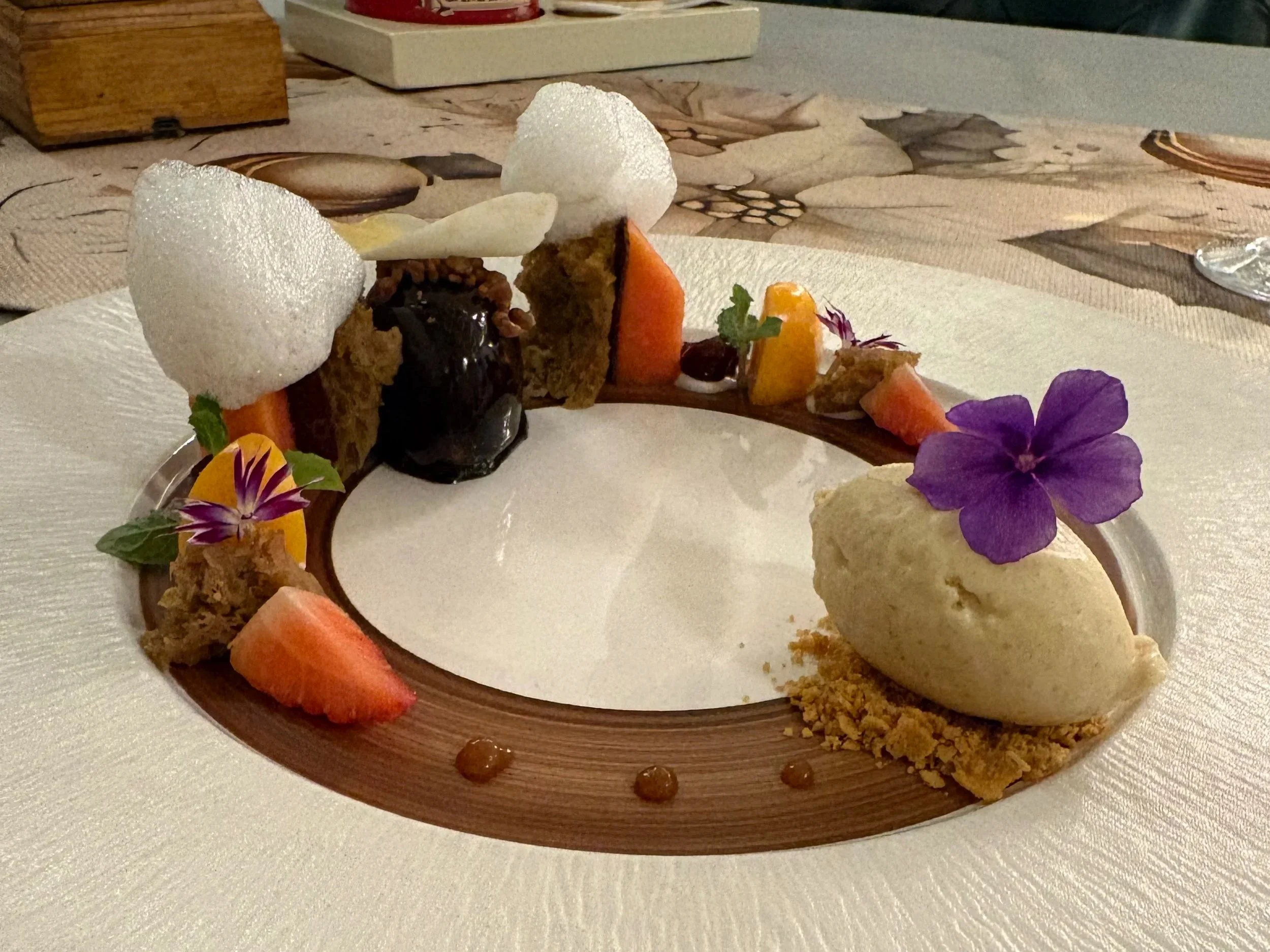
This was the most amazing dessert!
Up to that point, flavors were a subtle dance. The dark chocolate and durian - a local fruit common in Southeast Asia - were a punch n the tongue that woke me up before I could fall asleep in the restaurant. Not only was it a prefect end to the meal, but it showed how something local, the pungent and fragrant durian, could be used in the imported French technique.
VI. Conclusion
Restaurants like The Temptation aren’t just spreading the cultural hegemony of former colonizers; they are subverting the narrative of power by bringing their own culture to the elite tables and opening the doors to a wider audience. The creativity of entrepreneurs like Chef A will lead us into a new era of multifaceted discovery where ordinary people like you and I can have experiences we only dreamed of.
If you want to see what a Michelin star really means, check out their guide online. You can look for a city near you and even find something in your price point; it’s not just for expensive, fine dining. If you’re in Da Nang and have the spare cash and a couple of hours to spend? Then I highly recommend The Temptation.
Sources
https://www.thoughtco.com/cultural-hegemony-3026121
https://vinepair.com/cocktail-chatter/thai-government-culinary-diplomacy/
https://theculturetrip.com/asia/vietnam/articles/the-curious-history-of-vietnams-banh-mi-sandwich
https://www.sociologygroup.com/sacred-and-profane/
https://www.simplypsychology.org/emotional-labor.html
https://guide.michelin.com/en/article/features/what-is-a-michelin-star
https://en.wikipedia.org/wiki/Michelin_Guide
https://www.tiktok.com/@thetemptationrestaurant