Trump, the DNC, Weber, and Michels
What Sociology Taught Me About My Disillusionment With American Politics
I became disillusioned with the American two party system during the COVID-19 pandemic. I doubt there’s anything unique about this experience; we were all trapped at home, watching as our country tore itself apart over strangely drawn lines rather than trying to help each other get through this bad time. I had not previously been involved in politics beyond the measure of what I thought was my civic responsibility; I kept up with the news and I voted every election. Then I was named a state delegate… because no one else in my district bothered to show up to the meeting. Shortly after, quarantine!
Throughout lock-down, I was driven to get more involved. I hated what I was seeing, and I thought something better could come from things. I tried to volunteer with the national convention and with large advocacy organizations. At each turn I was met with the same response: a form letter thanking me for my interest and inviting me to help the cause by clicking this link to donate…
This was not what I wanted.
Looking to be involved does not mean looking to give money. I realize that money drives much of our politics, but money is also one of the worst flaws with our system. Money doesn’t build community. Money doesn’t create a sense of “I did something.” At the time, I was desperately looking for some sense of fulfillment
This isn’t an article for bitching about the evils of money and the need to repeal Citizens United (we do!), though. Rather, this is about how my sociology studies explained what was going on.
Iron Law of Oligarchy
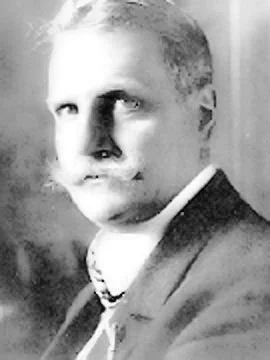
Political Parties (Archive.org) is a book published in 1911 by German-Italian Sociologist Robert Michels. Michels had been a member of the German Social Democratic Party - established in 1870 to advocate for the working class (Appelrouth & Edles, 2021). Michels, like me over a century later, grew disillusioned with the party as he watched it become more and more conservative, more and more concerned with the size of its coffers and voter rolls than it was with doing the work that caused people to sign up in the first place.
Sound familiar?
Michels wondered why this revolutionary party on the vanguard of worker’s rights became just another tool of the elites, of the oligarchy. Was it inevitable, or was there something special about this one?
What he came up with, and what he put in Political Parties is known as The Iron Law of Oligarchy.
Michels determined that the problem lay in the roots of the powerlessness of the working class. In order to affect democratic change, they first had to gain power - the ability to get what you want despite opposition. To do this required them to organize, as any power they might hope to wield came through their numbers. Organization requires technical expertise - experts. Someone has to make decisions, so you need centralized authority. Negotiating with numbers requires representatives, and those representatives then wield power on behalf of the masses behind them.
And here’s where we start running into a problem.
In other words, to wield collective power, the collective needs bureaucracy.
Bureaucracy reach a point where they become self-sustaining, where the goal of the bureaucrats is to maintain the status quo of the organization they represent. Rock the boat too hard and you threaten the life of the organization, and that can’t be allowed to happen. The driving force of the organization becomes the growth and sustainability of the organization, not the ideals that founded it.
American Political Parties
Now we hit upon why I left the Democratic Party. While it says it’s for the people, that it’s a champion of those of lower socioeconomic status, it has, by and large, become little different than the Republican party. The goal is fundraising, maintaining power, taking control of the government through legitimate electoral processes, and not in the goals of the people they represent.
How do you know this is true? They tell you what the important issues are in any given voting cycle. Through their Platforms (in the political sense, not the technological one) the parties put out their list of issues that they want to address and candidates that they support are expected to campaign on those issues. Ostensibly, each party’s convention can modify the platform, but the systems are often set up to continue to enshrine the power and authority of political elites (See: C. Wright Mills and the Power Elite).
This top-down approach tells you, at home, what you should worry about rather than you telling your elected representatives what you need accomplished in your community.
They have become self-perpetuating organizations whose focus is the power and the wealth, not the people.
Legitimate Authorities and Donald Trump
Robert Michels is not the only theorist in play here. His former teacher and mentor was a man named Max Weber. Weber had theories on social class, status, bureaucracy, and, more importantly for this, how authority worked. In Weber’s estimation, Authority was the legitimate wielding of power, and it came in three forms:
Charismatic, where the authority was held by someone of great personality who got people to follow them because of it, or perhaps through what was perceived as some kind of divine favor or calling. You can look at this as including Jesus Christ and the Prophet Mohamed, but also great civil rights leaders like Martin Luther King.
Traditional, which is to say some form of leadership one steps into through tradition. A monarch or tribal chief for example.
Rational-Legal whose authority is derived from the law. This could include elected officials, like the American President, but also police officers. The power is invested in the role, not the person, through some legal codification.
Of these two - Rational-Legal and Traditional - the impetus behind the authority is maintenance. Traditional authorities hold their power as long as the system says they do, and the same is true for Rational-Legal. By their own power, they are limited in making changes. If you want to make real change…well, Weber says you need a Charismatic leader for that.
Charismatic leaders are the firebrands, the ones that can push the change. They light up the passions of their followers and lead them to the promised land.
The thing is? If a charismatic leader is in power long enough, they probably become one of the other two types and lose the ability to make changes. So if they didn’t make the changes you wanted, or you now see new changes to be made, you have to find a new Charismatic leader and start the whole process over again.
This is where the US stands today. Donald Trump came in as a Charismatic figure, gathered a following, and swept his way into power and started making changes. Now, he’s the Rational-Legal authority of the country, and if you want things to change a different way, then you need a new Charismatic leader.
Enter…
That’s the problem, though, isn’t it? The DNC, presumptive opponent and champion of the people, hasn’t put forth a charismatic leader. They’ve put forth counters to ideas, they’ve stated their opposition and desire to change (mostly back to the way things were), but they haven’t put forth a single leader that excites enough people across the base to make a difference.
And they won’t because the DNC is a corpulent, moribund bureaucracy who benefits more from the way things are than they would from the way things could be.
International Typographical Union
A way forward is provided, strangely enough, in a defunct trade union: the International Typographical Union. Studied by a group of sociologists as a case study against the ideas of Michel’s Iron Law, the ITU seemed to defy all odds. These sociologists published their study in Union Democracy (OpenLibrary) and concluded that the ITU’s success in avoiding the bureaucratic downfall of other organizations came from the tension created in the factions that comprised its parts.
The ITU was made up of smaller organizations, and each one - each local union - wanted to keep a measure of their autonomy. This created factions in the organization that vied with one another, leading to a situation that kept corruption down and allowed the ITU to continue to function with the purpose with which it was originally created.
Yes, if the political left wants to see MAGA challenged they need a charismatic leader to rally behind. But maybe they also need to break up with one another. We’re not a monolithic set of ideas. What works in my community doesn’t work in yours. More importantly, voters want something other than picking the lesser of two evils. We can form coalitions, but maybe it’s time to ditch monolithic parties.
PS
If you ever wonder why the Trump administration attacks certainly academic disciplines as worthless, or goes after their funding? Consider the above theories. Sociology is an discipline that looks at power and its application; this knowledge is dangerous to those who hold power as it helps those without seize it.
References
Appelrouth, S., & Edles, L. D. (2020). Classical and contemporary sociological theory: Text and readings (4th ed.).