Rangi Ya Waridi: A Brief Psychoanalysis of Rafiki
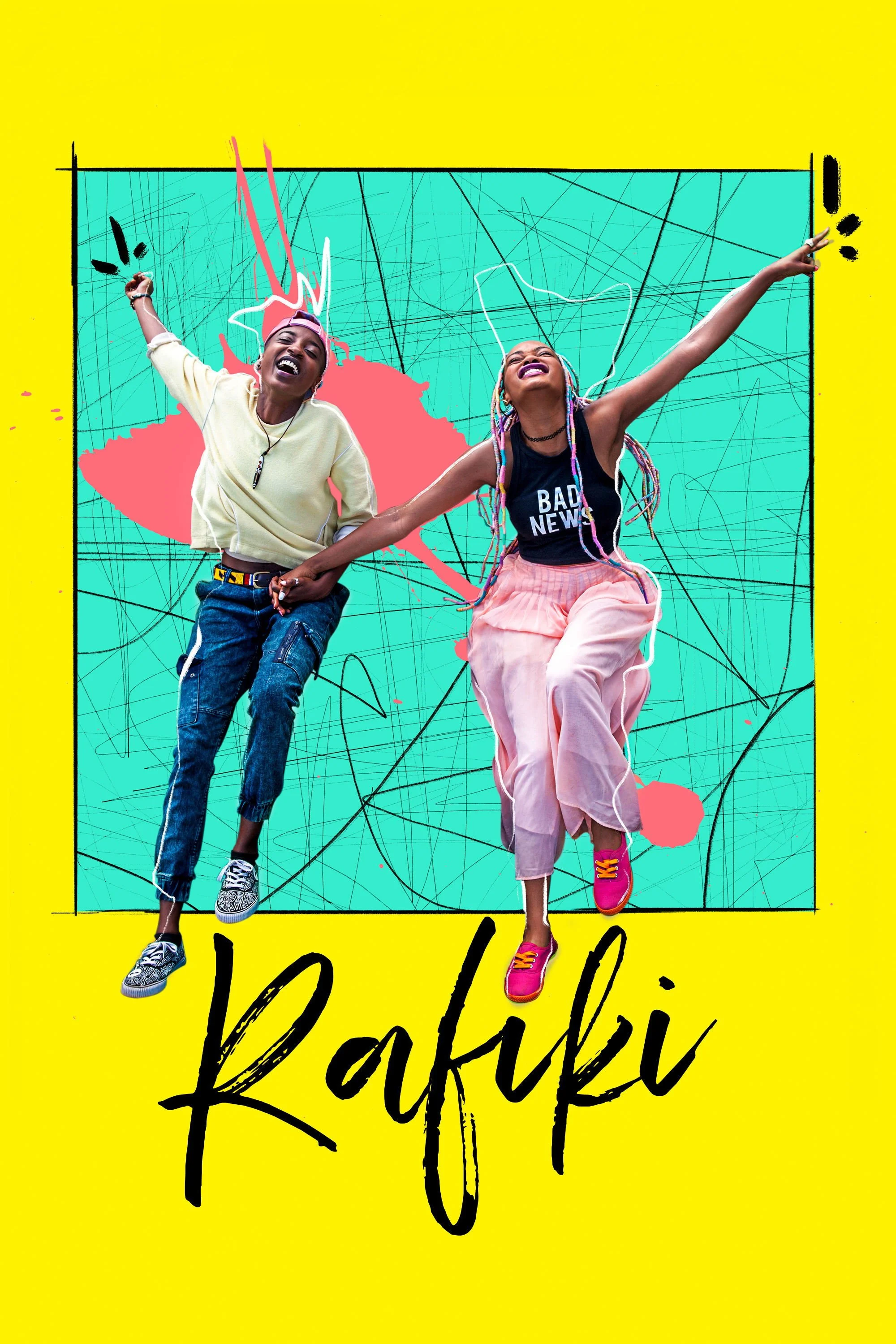
Wanuri Kahiu has been a nominated writer and director, a guiding voice of the African art for art’s sake movement and served as a juror for the Sundance Film Festival. Born in Kenya, educated in England and America, and cutting her teeth in the film industry with an internship on the set of The Italian Job, Kahiu knows her way around cinema. Rafiki(“friend” in Kahiu’s native Kiswahili), is the director’s fifth production and the first Kenyan film to ever be screened at the Cannes film festival, leaving with 17 awards of international acclaim even while the censors at home condemned Rafiki for displaying too hopeful an ending for a lesbian in Kenya. Yet, Wanuri Kahiu says she does not make political films, that others make them so. What Wanuri Kahiu made was a beautiful retelling of classic European theater – Romeo and Juliet – but through the lens of her home, Kenya, and she provided color and light to be our guide through the five acts.
As with Shakespear’s vaunted work, Rafiki opens act one with introductions. We meet the main characters, their friends, their family. We’re introduced to the star-crossed lovers, born of competing political families in a distant, foreign city that most of us have heard of but perhaps never seen. Rather than fair Verona, we’re shown a section of Nairobi called Slopes, setting our characters as lower middle-class residents of Kenya’s capital city. Kenya is a place of vibrant color, and Kahiu shows this… but with care. Male characters that were introduced to keep to earth tones – red, brown, beige, green, and maybe darker blues. Women introduce us to pinks, yellows, softer versions of browns and greens and blues. Men keep their hair short and of natural color; women might dye their hair but it’s natural colors like blonde or red, the lengths vary. There are exceptions to this rule, and three of them matter. Kena, the main character, is female, but in hairstyle and clothing choice and color she is presented with a masculine pallet. Ziki, the love interest, is a riot of color with tri-colored braids of pink, blue, and yellow (culturally, this is reserved only for young girls and not adults) tumbling from her head and clothing that stands out even among her collection of female friends. The third exception we are introduced to early on is an unnamed man who wears his hair long, his clothing more decorated, and an introduction to the film as someone’s “wife.”
By act two, the color has started to shift in the film. Kena and Ziki have started to come together. The repressed desire for a homosexual relationship is starting to kindle, and with it we see Kena’s wardrobe change. On their first date, she wears pink – a representation of feminity, yes, but also desire and, for Kena, vulnerability. She puts on a hat. On the second date, she’s in peach. She’s breaking away from the mold of masculine clothing as she finds what she’s been desiring the whole time, and the wardrobe and lighting department ensure that her joy is shown in the color choices. We are introduced to one other character who breaks the rules established for gender roles: the preacher. The Anglican priest wears purple, but it is adorned only with his clerical collar, tucked into black trousers. This makes the priest both a logical exception – he must wear a uniform - and notes that as a priest, even one allowed to marry, people still have differing ideas of where such men fit on the spectrum of normal sexuality.
In Act Three of Romeo and Juliet, there is death and Romeo’s banishment. In Rafiki, there is discovery and betrayal. Homosexual relationships are not welcomed in Kenya and Kena’s relationship with Ziki is a forbidden love beyond their fathers’ rivalry. The pair are sold out by the town gossip and the tone of the movie shifts. We see an angry mob come for Kena and Ziki in their hideout, the old van overgrown with pink flowers, and enacts a symbolic death and as we see Kena and Ziki beaten and dragged through the dirt, the color set of the movie collects the same stains as the women’s clothing. We shift to indoor scenes where the bright light of the Kenyan sun is replaced by harsh artificial bulbs or dimmed through curtains and blinds. Ken’s clothing, while holding to some feminine flourishes, shifts back to the male pallet. The fight, the police station, the parking lot, the return home: all of these are shown in literally darker settings.
Act four shows us what life is like after sorrow. Ziki has been sent to London and Kena remains in Nairobi, trudging through life to become the medical professional she said she was going to be. The lighting is brighter than the previous act but not quite up to the intensity of act two when our main character was happiest, most herself. She’s in uniform now, wearing blue scrubs – a neutral color, a neutral position like the priest. Not pink, not peach, and no hats.
Act five is the briefest and does not end as Romeo and Juliet; the metaphor is imperfect. Kena, after treating the town gossip at the hospital, learns Ziki is back in town and goes looking for after work. Kena’s in a white shirt, plain and unadorned. It’s evening, the sun isn’t as bright or as intense. In the final moments before the black scrolling and scrolling off-white of the credits, Kena makes her way to the top of a hill and looks around her for her lost love. The sky is fading in bruised purple and pink. The sun is setting.
Throughout Rafiki, Kahiu displays a marvelous grasp of symbolism. The tension we feel between the life Kena wants and the life she knows her country demands – to be a good wife one day – isn’t just shown through Kena’s actions, but reinforced through her relationship between her divorced parents (Kena works for her father, a seemingly nice man who started a new family and runs a shop, wants to be an elected official, and loves her desperately even if she is gay; Kena lives with her mother who still pines for her father while hating what he represents and blaming him for the demons she now must cleanse from her daughter). Through all of this, though, it was pink that caught me the most. Pink, that Kena chose to wear for the first date. Pink, the color of the first dress we ever see Kena in. Pink, like the flowers that grow up over the abandoned van where Kena and Ziki have their private moments.
In the final moments of the movie, we see Kena beneath the dusky sky. She smiles. There’s a lens flare. Her white shirt reflects the heavens and it is rangi ya waridi. The color of roses. Pink.